


Who are Trafford CAMHS for Children in Care?
The Trafford CAMHS team for Children in Care (CIC) is a CAMHS team for children and young people cared for by Trafford Council.
CAMHS stands for child and adolescent mental health services and we are an NHS service. We offer support and treatment for children and young people, up to their 18th birthday, who are experiencing difficulties with their mental health and wellbeing. The service also works with their parents, foster carers and social workers/residential workers.
A member of the team will work together with you and those who care for you (where appropriate), to create a plan for how best to support you. This plan is different for every person, as everyone we see has different needs and things they want to work on with us.
Download our Service Information Booklet
Our People
- Service Lead – Mark Knowles
- Clinical Lead – Niki Whitelock
- Administration Lead – Julie Webb
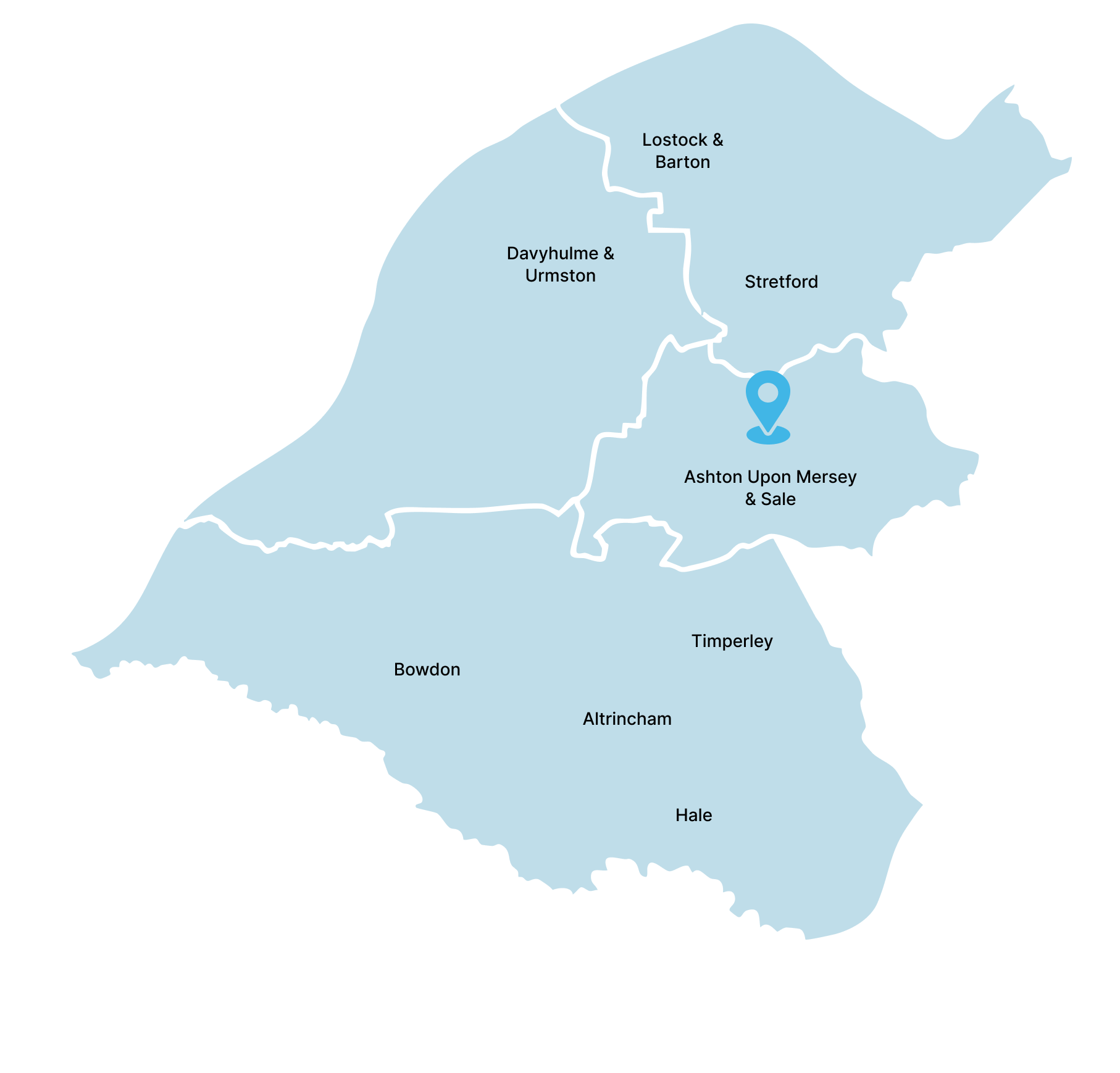
Trafford Children in Care Location
Contact Details:
How to get to us:
By bus: 256 from Piccadilly Gardens bus station, 263 from Altrincham bus station, 255 from Urmston town centre, 256 from Stretford or Chorlton
By tram: Old Trafford Tram Stop
In need of urgent help?
Get Urgent Help NowAccess to Trafford Children in Care
Most referrals are made by Social Workers but we also accept referrals from GPs/other health professionals, school or via the iSTART (for children that have come into care) or Unaccompanied Children pathways.
Before a referral has been made, given the importance of consent, it is essential that the referral to our service has been discussed with whoever has parental consent which is usually the parent and/or social worker. The referral also needs to be discussed with you so that everyone is aware and understands.
Waiting Times
We aim to offer an Initial consultation within 4 weeks and a first appointment for the young person within 12 weeks. We have two additional pathways which include:
- iSTART- all children that have come into care will be seen within 6 weeks
- Unaccompanied Children will be offered an initial consultation within 6 weeks
Frequently Asked Questions
We will ask about any difficulties you are experiencing and if you want to talk about anything from the past. We will ask you about your life, school, and people who are in your life.
We will discuss things at your own pace, and you can decide what you choose to talk about.
When we receive a referral, we usually discuss this further with your social worker so we can be clear about who else is involved and how we can help. Depending on your age, we will ask if you have given consent for the referral. An appropriate clinician will initially meet with you to gather information on your current difficulties, school, family and more. They will do this by asking questions with yourself, parent/carers and possibly other people, such as school and GP. This will then lead to a plan about the next step – this may be seeing you for more assessment, some therapeutic work or we may work with your carer or residential staff instead so they can support you. What we offer this varies from person to person, but they will support you through the options and talk things through with you.
Confidentiality means that information shared between you and the clinician will not be shared with others unless they are concerned that you are at risk to yourself/others, that you are at risk from others or that someone else is at risk/harm. If we need to share information, the clinician will talk about this with you and you can share how you want this to be discussed.
Nothing is expected of you other than turning up! Over time workers may ask you to complete tasks, but this will not happen straight away.
The clinicians may ask questions about your life, however, you do not have to go over things unless you wish to and we can also talk to your social worker too if you would prefer.
That’s ok! We understand it can be difficult to talk about yourself and what you are experiencing. It may take a few sessions to feel comfortable with the clinicians, we recognise this and will not pressure you to talk. We can also provide alternative ways to communicate such as using a whiteboard, drawing, using prompts/cards and more.