


Who do the Social Communication Pathway (SCP) work with?
The SCP team work with children and young people who have differences with the following:
- Social relationships
- Expressing and understanding feelings
- Communication
- Changes to routine/unexpected changes
- Sensitivity to sensory input such as noise, textures and tastes
- Young people may also have special interests and things they are very good at
Some children and young people experience these differences because they are autistic (also known as autism spectrum disorder or autistic spectrum condition). Some children and young people have these differences but are not autistic. The SCP’s job is to work with children/young people and their families to see if the child/young person is autistic.
The SCP is a multi-disciplinary team, which means lots of different professionals can contribute to an autism assessment. This includes:
- Consultant Child and Adolescent Psychiatrist
- Clinical Psychologist
- Speech and Language Therapist
- Occupational Therapist
- Mental Health Practitioner
- Educational Psychologist from OneEducation
- Consultant Paediatrician
Our Team Includes:
- Consultant Child and Adolescent Psychiatrist
- Clinical Psychologist
- Speech and Language Therapist
- Occupational Therapist
- Mental Health Practitioner
- Educational Psychologist from OneEducation
- Consultant Paediatrician
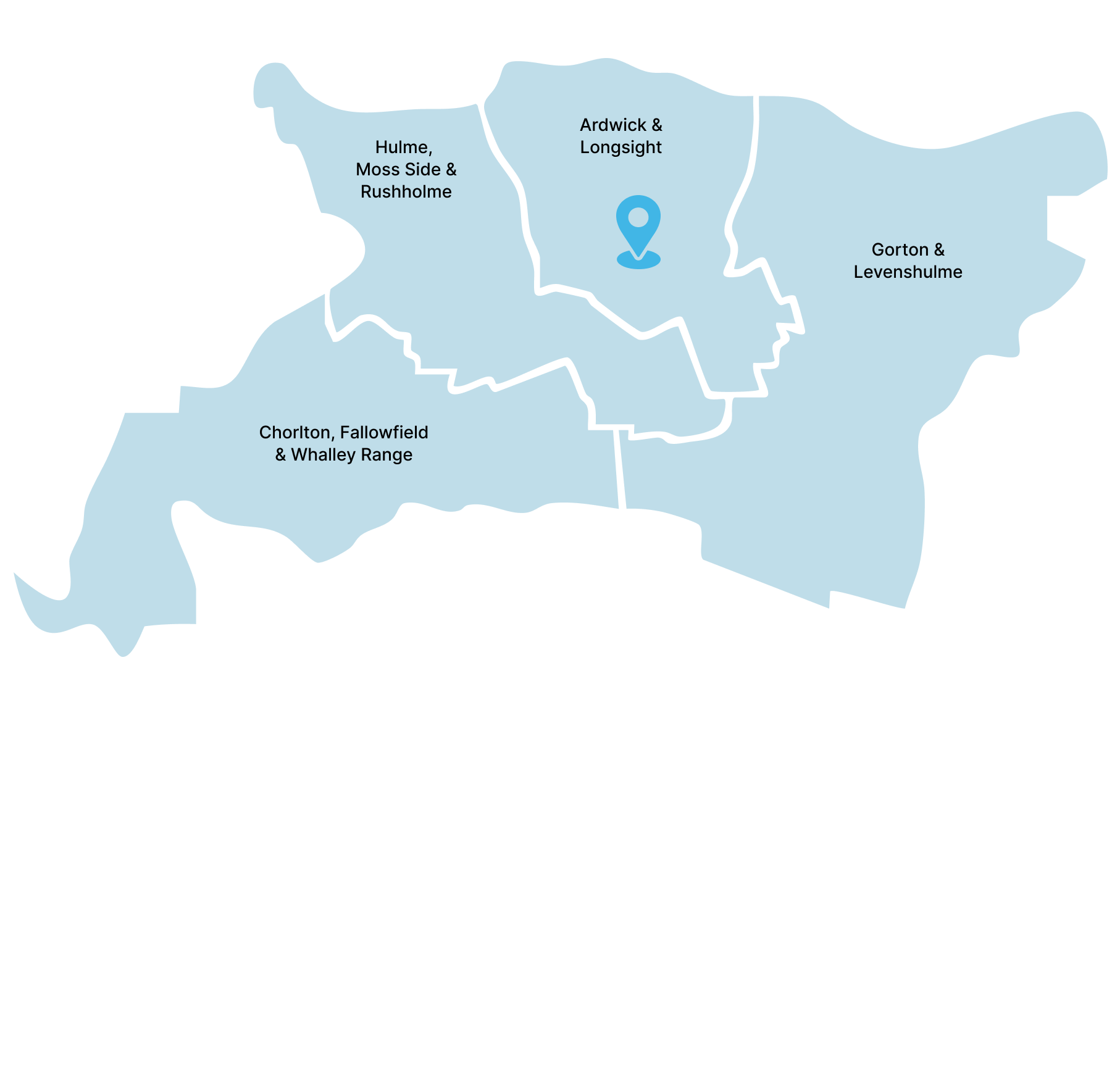
Social Communication Pathway Location
In need of urgent help?
Get Urgent Help NowAccess to the SCP
Referral Criteria
- Child or young person over the age of 3 years; young people can be offered appointments until their 18th birthday
- Registered with a Manchester GP
- Questionnaires completed by parent/carer and school about the child/young person’s social communication.
There are other reasons that children and young people can present with social differences, communication differences and behaviour that challenges. For example, if the child has specific learning or language difficulties; or behaviour may be a reaction to significant life experiences. We may feel an autism assessment is not appropriate in this case.
Referral Process
- Parent/carer completes a parental referral form. If you are a professional, you should provide parent/carer with a copy of the form and support them to complete it, if appropriate.
- School/nursery should complete a separate education referral form.
- For young people over the age of 14 years, it may be helpful to complete a Young Person’s referral form as well.
Please also include any relevant reports and information, e.g. Speech and Language assessments, Educational Psychology assessments. This will help avoid delays in processing your child’s referral.
Once both parent/carer & education forms are completed, we will consider whether we think an autism assessment is the best next step.
How do I return my completed form?
You can return your completed forms to us by email:
- South team: mft.south.scp@nhs.net
- Central team: centralmanchesterscp@nhs.net
- North Team: northmanchesterscp@nhs.net
Frequently Asked Questions
The assessment process usually takes around 3–6 months, depending on what types of assessments are needed. We know waiting can be difficult, but we’ll keep things moving as quickly as possible.
Waiting times can vary. We look at referrals in the order they’re received, so everyone gets a fair chance.
We need two forms sent by email:
- A Parent/Carer Referral Form
- An Education Referral Form (this includes information from the school’s SENCO about what support has already been tried — the “plan, do, review” process)
That’s okay — if you’re struggling to complete it, you can contact your local team for help (see the email address above). We do need all sections filled in before we can accept a referral, but we’re here to support you.
We ask for evidence of what’s already been tried in school, to make sure your child gets the right support in the right place before going ahead with a specialist assessment.
Exceptions include If there’s been a big change or loss of skills, such as talking.
If you/your child isn’t in school, you can ask a healthcare professional (like a GP or support worker) to provide supporting information.
For support around getting back to school, please visit: Manchester Local Offer – School Attendance Support
If you/your child has recently left school, a previous teacher can fill in the school referral form.
We understand that children and young people can behave or communicate differently in different settings. It’s a good idea for parents/carers and school staff to meet and share what they’ve noticed, so you can agree on a plan together.
We’re happy to look at referrals even if there are different opinions — and young people aged 14+ can also complete their own referral form.
If you/your child’s situation improves, you might decide a referral isn’t needed anymore — and that’s okay. But if concerns continue, a referral to the pathway may still be the right step.
The Social Communication Pathway (SCP) focuses on assessment only — not ongoing mental health support.
If you/your child needs help with their emotional wellbeing or mental health, a referral to your local CAMHS team might be more appropriate.
You can also find community-based support for positive mental health and wellbeing through the thrive hubs.
If you’re worried about immediate safety, please contact emergency services or go to A&E right away.