PARTNER NEWS: TOMMY'S
A Manchester research centre that has helped thousands of families bring home their babies after heartbreaking pregnancy loss is celebrating 25 years of success.
On Thursday 12 November researchers, healthcare professionals, bereaved families, charity leaders and the government’s first Maternity Adviser, Michelle Welsh MP, came together to recognise the remarkable achievements of Manchester’s Maternal and Fetal Health Research Centre.
The centre, a collaboration between Manchester University NHS Foundation Trust, University of Manchester, Tommy’s – the pregnancy and baby charity – and University of Aberdeen has helped transform maternity care and improve pregnancy outcomes for thousands of families across the UK.
Based at Saint Mary’s Hospital, the Maternal and Fetal Health Research Centre hosts one of Europe’s largest pregnancy research groups, dedicated to understanding stillbirth and pregnancy complications with a particular focus on looking at the role of the placenta in pregnancy.
Since it opened in 2001, researchers at the centre have published more than 700 research papers and made breakthroughs that have changed maternity care across the UK.
Among its achievements is research which found standard pregnancy care was failing to meet parents’ needs in pregnancies after they had been through a stillbirth. This led to the UK’s first specialist Rainbow Clinic at Saint Mary’s in 2013, providing dedicated care for families who are pregnant following a stillbirth or after their baby died shortly after birth. Since then more than 36 Rainbow Clinics have been set up across the UK, with others now in Australia and the USA.
The centre’s research has also informed national guidance to reduce stillbirth, including research Tommy’s helped fund which found going to sleep on your back during the third trimester of pregnancy more than doubles the risk of stillbirth. This work has shaped advice given to pregnant women and is estimated to save 130 babies’ lives across the UK every year.
Researchers at the centre played a key role in showing that tests for a hormone called Placental Growth Factor helps identify pre-eclampsia earlier and reduces severe complications for mothers and babies. They also helped secure rollout of this testing, now adopted in more than 90% of maternity hospitals in England.
The 25th anniversary event celebrated families who have been a core part of the centre’s journey.
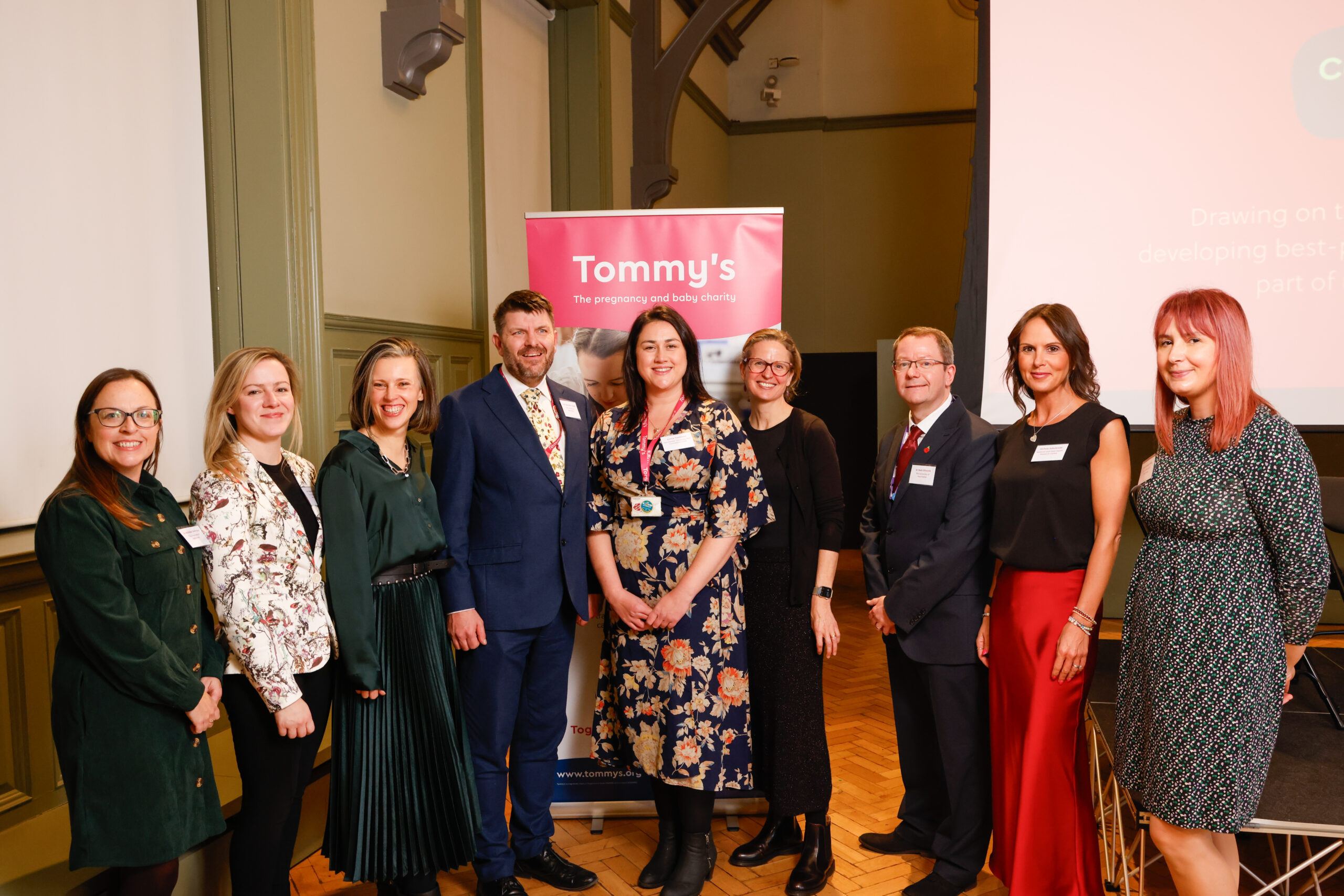
“They’re the reason I was able to smile during my pregnancy”
Nichola Sobolewski, who sadly lost baby Sonny in 2018 on the day he was born, was cared for at the centre’s Rainbow Clinic in her next pregnancy by Professor Alex Heazell, Director of the centre, and Rainbow Midwife Emma Tomlinson. She now leads the patient group that helps contribute to research projects at the centre, making sure that families experiences of baby loss stay at the heart of their work.
She credits the Rainbow Clinic team with helping her through one of the most challenging periods of her life: “The Rainbow Clinic team are the reason I was able to smile during my pregnancy,”she said.”I knew I had the most amazing team on my side, fighting with us, and because of that I knew we had the best possible chance of bringing our baby home.”
But for Nic, the impact of the clinic went beyond bringing her son home: “When my youngest son – my rainbow clinic baby – was born, I was in the best possible physical and mental health I could be. That meant I could be the best mum possible to all my children.”
Nic’s is one of more than 2,300 families that have been cared for at the Rainbow Clinic since 2018, while thousands more have benefited from the centre’s wider research findings.
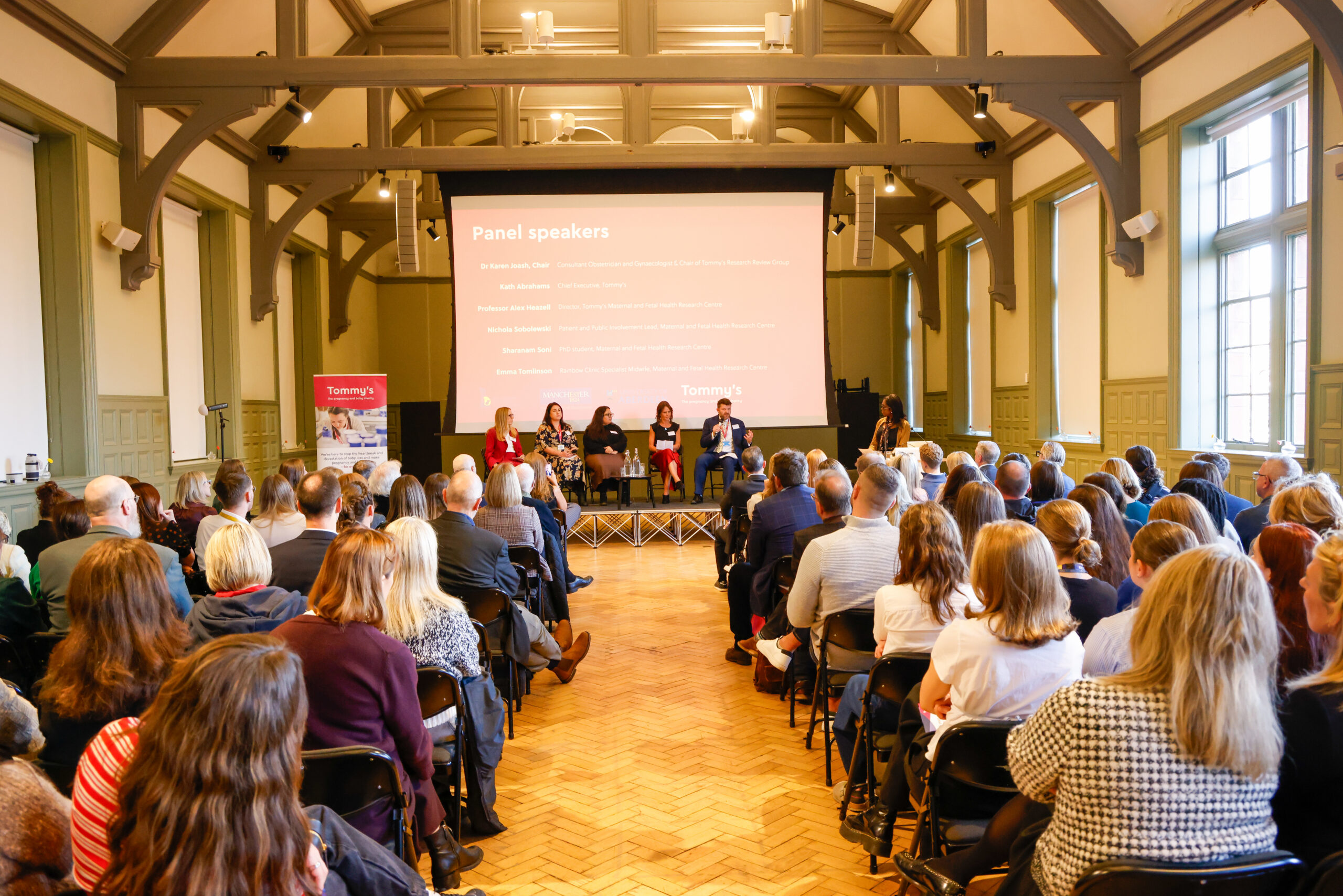
Professor Alex Heazell, Director of the Maternal and Fetal Health Research Centre, said: “It’s families like Nic’s that show us why our research matters.
“For 25 years, the team here at the Maternal and Fetal Health Research Centre has worked tirelessly to understand why pregnancy complications and baby loss happen, and to use that knowledge to improve care.
“None of this would have been possible either without the families dedicated to our work who took part in research. More than 9,600 people have taken part in our studies and we’re so grateful for their commitment.
“It is incredibly rewarding to look back on the discoveries and insights that have helped improve maternity care, not just here in Manchester but across the UK and beyond.
“I’m so proud to lead the groundbreaking work that happens here. I hope we’ll be here in another 25 years’ time with even more answers for families because sadly, too many still experience the heartbreak of stillbirth and baby loss.”
Michelle Welsh MP, the Government’s National Maternity and Neonatal Adviser, said: “The Maternal and Fetal Health Research Centre’s work over the past 25 years has transformed maternity care and made a profound difference to thousands of families, with research that has shaped national guidance and helped save babies’ lives.
“As National Maternity Adviser, I know how vital it is that we continue to turn research and families’ experiences into meaningful improvements in care, and I congratulate everyone who has contributed to the centre’s achievements.”
Kath Abrahams, Chief Executive of Tommy’s, the pregnancy and baby charity, said: “The Maternal and Fetal Health Research Centre has been at the forefront of some of the most important advances in pregnancy and baby loss research of the past 25 years.
“Tommy’s is proud to have supported research right from the very beginning that has changed clinical practice, improved care for families and ultimately helped save babies’ lives.
“As we celebrate this milestone, we’re also looking ahead and working towards a future where fewer families experience the heartbreak of baby loss and pregnancy and birth is safe – for everyone.”