Rachel and Harry Ware had grown up sharing a life together as siblings. Little did they know they would one day end up sharing an organ.
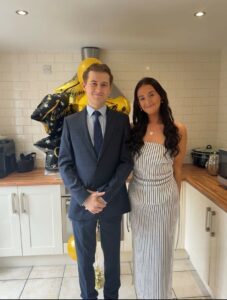
The pair, from Stockport, recently went through Manchester Royal Infirmary’s living donor organ transplant programme after Harry developed kidney failure whilst studying at university.
The decision to donate part of your body to another person is never an easy one, nor is bearing the weight of such an act of generosity. But as the pair sat in Manchester Royal Infirmary’s renal transplant department awaiting their surgeries, which would take place one after the other in the same department, they were happy they had made the commitment.
Stepping in to save her brother’s life, Rachel described their relationship as siblings.
Rachel said: “As kids we were very close. There were obviously love-hate parts, like all siblings experience, but there were never any crazy arguments. I was the older one at school and always felt protective of him.”
Harry added: “We do have a younger brother called Oliver, and I’m close with him too, but with Rachel it always felt like we were close friends. We go walking together, and as soon as she learnt to drive we’d head off together for a coffee. We had our own friends as well, but there has always been a special bond.”
Their closeness is something Harry was grateful for when he started to become ill. Whilst studying at university in London, Harry began to feel “weird”. He suffered from bad cramps and needed the toilet more than usual.
“By the time I reached my third year, I was sick all the time and couldn’t stay awake,” explained Harry.
“We’d be hosting parties and I’d be asleep in my room. Looking back, I was properly ill, but I just kept going with it. My parents saw me at Christmas and were so worried because I couldn’t stand up without becoming breathless.
“I eventually went for a blood test where they immediately put me in a taxi to an A&E department in London due to how poorly I was and the risk of fainting. I was kept in longer than expected whilst the doctors looked into my diagnosis. After five days, they came back with Alport syndrome, a rare kidney condition.
“My kidney function was 5%, so the conversations about a transplant happened really early on.”
Rachel described how the family navigated such a difficult conversation.
“We all discussed who could donate. Oliver offered first, but I was travelling in Asia and he was deemed too young. After that, they said my medical history suggested I might be viable, so I became the primary donor.
“There was zero pressure from anyone in the family. It was very much our decision to make and the family supported whatever that decision would be.”
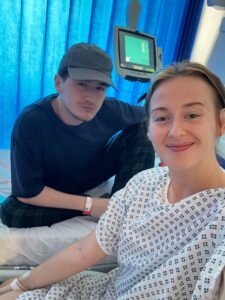
Harry echoed Rachel’s sentiments.
“Things got a lot easier when my care moved from London to Manchester Royal Infirmary. They were much more organised and quick at getting everybody up to speed. It was because of them that we found out Rachel would be a viable donor.
“I guess some people might find it odd, but Rachel and I never had that conversation. She never asked if I wanted her kidney and I never asked to have it. She spoke to my mum about it and just texted me saying she wanted to do it.”
“It all felt very quick,” said Rachel.
“He’d never been poorly before, so going from messages saying he was unwell to being diagnosed with kidney failure in a matter of weeks was a shock.
“Our family’s outlook was simply, ‘What can we do to help?’ We looked at getting on the donor list as soon as possible, and I did loads of reading about other people’s stories online.
“My phone’s algorithm picked it up and started pushing me transplant stories. That was when I saw one about two patients at Manchester Royal Infirmary where the donor was at the other end of the living donor age scale. He was quite old, whereas I’d be judged to be quite young.”
The pair embarked on the ten-month donor assessment process, during which extensive physical and psychological criteria had to be met.
Lisa Mulreid is one of the Living Donor Transplant Co-ordinators at Manchester Royal Infirmary, where they carry out over 70 living donor transplants every year. She explained the process from the service’s perspective:
“For a living donor kidney transplant, a full sibling is often considered one of the best potential donors, as they have the highest chance of sharing the same HLA (Human Leukocyte Antigen), also known as tissue type. There is a 25% chance of each sibling being a full match, a 50% chance of being a partial match, and a 25% chance of not being a match at all.
“There’s a lot of work involved, and it’s a very thorough process. We check their medical history and current health, test their blood, and the donor will have scans to assess their kidneys in greater depth. We also assess the function of their liver, thyroid and heart. It’s basically a full health MOT.
“We can consider most people as potential kidney donors, as long as they are a match. A history of diabetes and certain cancers may prevent donation, but other than that, you don’t have to be related. As long as someone is over 18, there are no issues with age, and ethnicity does not matter either.
“That said, there is a need for more living donors, particularly in ethnic minority groups, as recipients from these communities often have a higher risk of renal failure and face longer waiting times for a suitable match on the national organ transplant waiting list.”
On her team’s experience of caring for Rachel and Harry, Lisa said:
“Rachel and Harry were a fantastic pair to work with. They were both quite young to go through this process.
“Rachel was very laid-back throughout her work-up and, on the day of surgery, was very calm and keen to get on with it. She maintained a positive attitude throughout and was determined to help her brother.
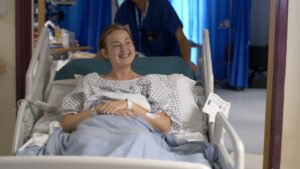
“In the build-up to the procedure, the pair sat by each other’s bedside without fear. They both described being focused on getting through the procedure and spoke of the sense of reassurance provided by the renal transplant team.
Following their procedure, Harry has recovered well. The pair even watched their surgery back after the hospital filmed it as part of an educational package for future patients.
“Surgery was quite an overwhelming idea, as I’d never had an operation and rarely went to hospital. Seeing my kidney in the pre-operative scans and then in the recorded footage was crazy.
“I actually had a really nice but emotional moment with my mum when we watched the footage back in the car. It was really interesting to see how many people are involved in a transplant procedure. There were a couple of people operating on me whom I remembered walking past in corridors, and it was cool to see them then operating on me.
“I feel lucky to have been able to experience it this way.
“I couldn’t believe the moment where my kidney is in Harry and it suddenly comes to life. It’s all been worth it for moments like that or seeing Harry walking okay again.
“I was looking at my scar the other day and thought it’s pretty cool that Harry now has a bit of me in him. We’ve been wondering whether he’ll also get my mood swings…
“It is weird to think he has a piece of me in him, but I look at my scar and it’s also like I have a piece of Harry with me forever. Almost like a tattoo to remind me of him.”
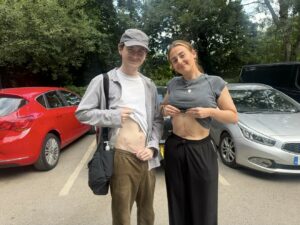
As the organ recipient, recovery has been more challenging for Harry, but his gratitude for his sister’s gesture still shines through.
“Before the surgery, Rachel was the only person I felt 100% comfortable talking to about it all. I couldn’t have wanted a better person to go through it with.
“My girlfriend was also with me in hospital and was a great support. I think part of my lack of fear was because I knew they had my back.
“Recovery has been tough in that I have to be cautious about potential infection. I haven’t even hugged my mum yet. At one point it did look like my body might be rejecting Rachel’s kidney. I couldn’t bear to tell her after all we had been through. But my kidney function is at 67% and it keeps jumping up every day.
“The two of us haven’t really had the time to discuss it.
“The biggest relief is not having to have dialysis anymore, as it started to rule my life. It’s a really weird feeling to be able to think, ‘Oh, I don’t have to go and sit in a chair for hours now. The day is my own to use.’
“It feels like I have my life back.”