


Who are the Manchester Learning Disabilities & Autism Team?
We are a team of Clinical Psychologists, Learning Disability Nurses and Speech and Language Therapists who work across the city in CAMHS bases and in community settings e.g. schools. We aim to:
- Provide evidence-based interventions in accordance with NICE guidelines for all the children and young people we see
- Offer our parent/carer groups, such as: Riding the Rapids and communication groups
- Attend regular meetings with all the specialist support schools
- Offer training to other professionals including youth workers, hospital staff, other CAMHS professionals and education staff
Autistic children and young people are seen by all our CAMHS teams depending on their needs. We work with children and young people up to the age of 18 who are autistic, or who have severe learning disabilities, who are experiencing challenges with their mental health or behaviours of concern, and who would benefit from one of our interventions.
Someone with severe learning disabilities usually attends a specialist school designed for young people with these needs. These young people will have an intellectual disability and significant challenges in learning new skills, which means they will need extra support in areas like communication, self-care, and independence.
Who we work with and what we offer:
We work with families to think about children’s emotional, sensory and communication needs, and how the adults supporting the young person can help them with these. We do some direct work with parents, including our group, Riding the Rapids. Riding the Rapids aims to support parents to understand their neurodivergent child’s stress, distress and behaviours that they are worried about. Parents on the course work through ideas to reduce these worries and increase emotional well-being.
We also do some direct work with young people. These are neuro-affirmative approaches based on Cognitive Behaviour Therapy, Compassion Focussed therapy, Acceptance and Commitment Therapy, EMDR (Eye Movement Desensitisation and Re-Processing) and creative approaches to well-being. We will explain this more when we meet, to make sure you get the right support.
Location:
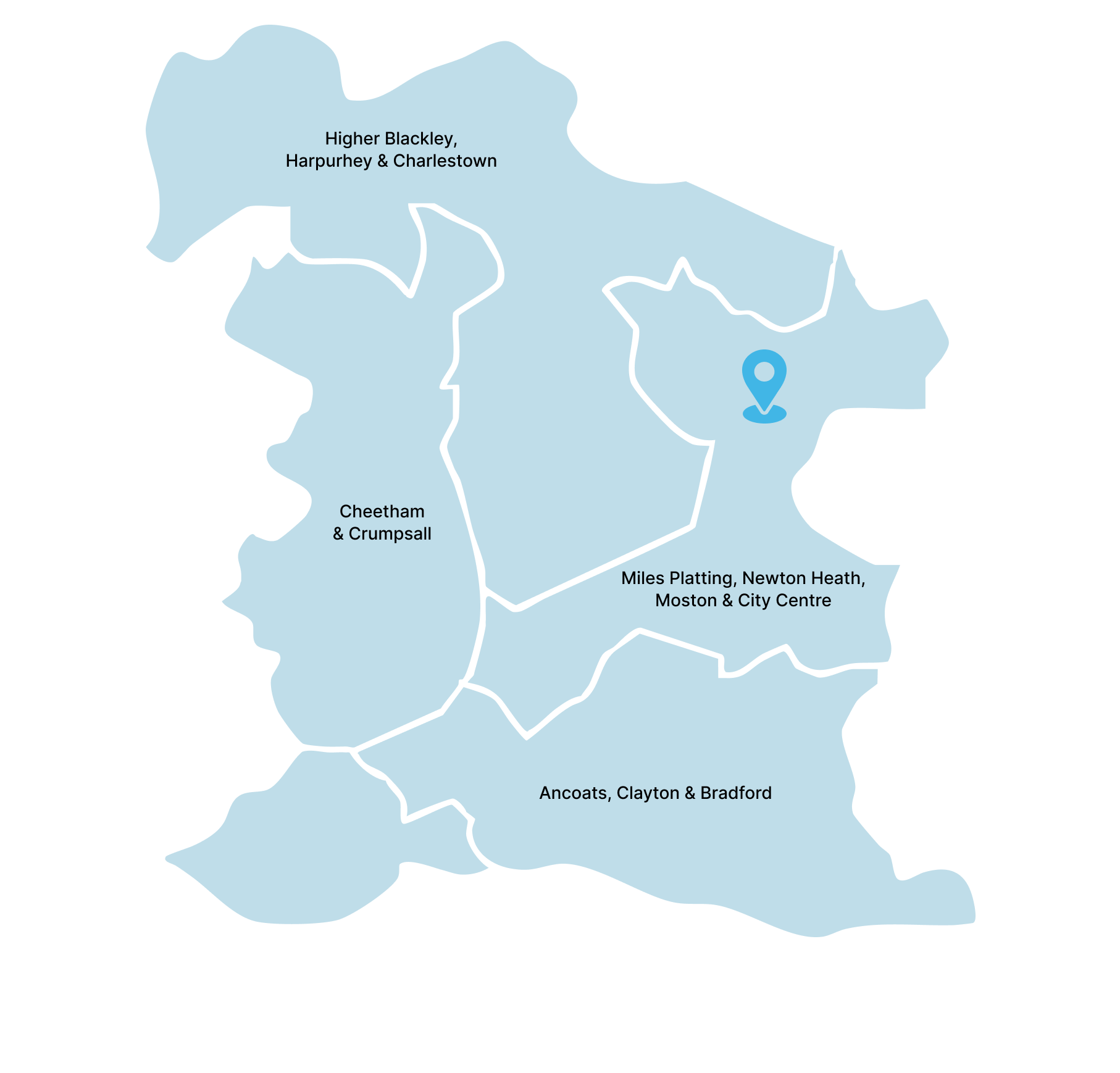
The team is city wide and representatives are in all 3 CAMHS bases – the Carol Kendrick Centre, the Winnicott Centre and the Bridge.
We see many of our families at the CAMHS bases, and we also work in schools and family homes where this is appropriate. We offer some video appointments too.
Manchester LD&A Location
In need of urgent help?
Get Urgent Help NowAccess to Manchester LD&A
Self-referral or referral by professional using the form below:
Waiting Times
Once a referral is received it is discussed at our weekly referrals meeting. If the referral is suitable we will arrange an initial phone appointment, usually within 4-6 weeks. In the meantime, in most cases, parents/carers will receive a ‘Welcome Call’, explaining the referral has been received and that a phone call is being booked. At the initial phone appointment next steps will be agreed. Sometimes this might include signposting to other support. If it is felt that the team has a suitable intervention to offer, then the young person will be placed on a waiting list until they can be allocated to a worker. Waiting times can vary depending on the type of intervention being offered and demands and capacity within the service, however risk and urgency will always be taken into account.
Frequently Asked Questions
Riding the Rapids offers two parent/carer groups:
- One for parents and carers of primary school–aged children
- One for parents and carers of young people in secondary school (Years 7–11)
Both groups help families understand and support their child’s emotional wellbeing and behaviour, with the aim of reducing stress and improving quality of life for everyone.
We also run Communication groups for parents and carers. These sessions help you learn practical ways to communicate more effectively with autistic children and young people, supporting better understanding and connection at home and in everyday life.